Friday, September 9, 2011


Red 17 Climbers Poetry Recital
What a great afternoon! Our kids are fantastic! All of our children did an absolutely fabulous job at reciting their poems. Thanks to Marcelle for her introduction and Charlotte from Room the Mini Climbers saying the thank you. And a final thank you to all the wonderful parents who came to watch. (If you have any photos please email them to me, as I was a little preoccupied to take one of each child).
 |
| Before the parents arrived! |
Thursday, September 8, 2011
Skipping!
Wow! Room 17 have really improved with their skipping. We can now all hold the skipping rope behind us, flip it over our heads and a lot of the time skip over it with one foot or two feet. Our skipping ropes are a bit long for us, so if you have one that is your child's size at home, please send it along as it would help a lot!
We skip around to music and have a lot of fun.


We skip around to music and have a lot of fun.


The van Asch Library
Yay! Finally we got to visit the library. The children had a marvelous time exploring the library, including the resident axolotle!


 |
| Dale the van Asch Librarian |


Japanese Food

We learnt....
The word for "meal" in Japanese isgohan. This word actually refers to steamed rice, but rice is such an important food to the Japanese thatgohan has come to mean all sorts of meals. A traditional Japanese meal consists of a serving of plain, white rice, along with a main dish (fish or meat), some kind of side dish (often cooked vegetables), soup (often miso soup), and pickled vegetables. Japanese rice is sticky when cooked, making it ideal for eating with chopsticks.
Japanese today eat many dishes from around the world, notably from Europe, North America, and Asia. In addition to rice, Japanese people eat bread, noodles, and pasta and enjoy a wide array of meats, fishes, vegetables, and fruits. Sushi, tempura, sukiyaki, and other Japanese foods famous abroad are, of course, also popular in Japan.
Cities, in particular, have many fast-food restaurants offering hamburgers and fried chicken, which are especially popular with young people and children.
Before eating, Japanese people say "itadakimasu," a polite phrase meaning "I receive this food." This expresses thanks to whoever worked to prepare the meal. After eating, people again express their thanks by saying "gochiso sama deshita," which literally means “It was quite a feast."
Before eating, Japanese people say "itadakimasu," a polite phrase meaning "I receive this food." This expresses thanks to whoever worked to prepare the meal. After eating, people again express their thanks by saying "gochiso sama deshita," which literally means “It was quite a feast."
Tuesday, September 6, 2011
Japan
We are learning about Japan. It is one of the Rugby World Cup teams and we are learning a bit about their country and culture. Tonight as a little bit of homework, the children were asked to find out something else about Japan using the links to the right on the blog.
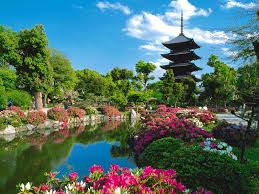
Read our comments below about what we already know about Japan.
Check out our wiki that shows you what we know and want to know about our topic.
Read our comments below about what we already know about Japan.
Check out our wiki that shows you what we know and want to know about our topic.
Subscribe to:
Posts (Atom)